
When it comes to taking care of your car, few things are more important—or more overlooked—than regular oil changes. It’s easy to put off, especially when life gets busy, but ignoring your engine’s need for fresh oil can lead to serious, costly damage down the road.
At Central Texas Qwiklube in Cameron, TX, we’ve helped thousands of drivers keep their vehicles running strong with timely oil changes and honest, no-pressure service. Whether you’re new to driving or simply want to make smarter maintenance choices, this guide will walk you through the key signs your car might be overdue for an oil change—and why acting fast can save you headaches later.

Why Oil Changes Matter
Your engine is made up of dozens of moving parts working together under high heat and pressure. Motor oil is the lifeblood of the engine—it lubricates these parts, reduces friction, helps manage heat, and carries away dirt and debris. Over time, oil breaks down and becomes less effective at doing its job. That’s when problems start.
Failing to change your oil on time can result in:
- Decreased fuel efficiency
- Engine overheating
- Poor acceleration
- Sludge buildup
- Permanent engine damage
That’s why staying on top of oil changes is one of the simplest ways to protect your vehicle.
Top Signs Your Car Needs an Oil Change
1. The Oil Change Light or Check Engine Light Is On
This one’s a no-brainer. Most modern vehicles are equipped with a dashboard light that lets you know it’s time for an oil change. If the oil change light comes on, don’t ignore it—get it checked out. And if the check engine light turns on, low or dirty oil could be a contributing factor.
2. Engine Noise or Knocking
Oil lubricates your engine’s moving parts, so when it becomes old or too low, you might start hearing strange noises. Ticking, tapping, or knocking sounds are a warning that your engine parts may be grinding together—something you never want.
If your car suddenly sounds like it’s trying to start a rock band under the hood, schedule an oil change immediately.
3. Oil Looks Dirty or Dark
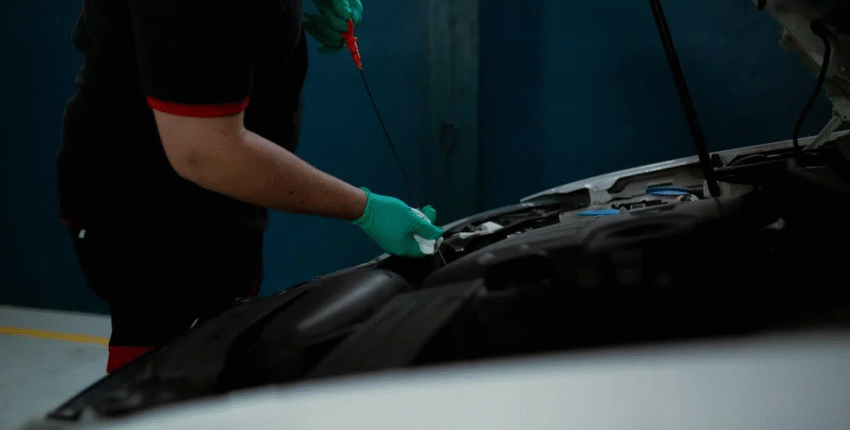
Fresh oil is amber-colored and transparent. But over time, it darkens as it collects dirt and debris from the engine. You can check the condition of your oil by pulling out the dipstick, wiping it clean, reinserting it, and checking the oil’s color and consistency.
If it looks dirty or gritty, it’s time to get it changed—even if your mileage isn’t quite up yet.

4. You’ve Driven More Miles Than Recommended
Most cars need an oil change every 3,000 to 5,000 miles, though some newer models can go 7,500 to 10,000 miles depending on the type of oil used. If you’re not keeping track of when your last oil change was, you could be overdue without even realizing it.
Tip: Set a reminder on your phone or ask your mechanic to place a mileage sticker on your windshield.
5. Exhaust Smoke
A little vapor from the tailpipe is normal, especially on cold mornings. But if you notice actual smoke, something’s wrong. It could be a sign of an oil leak or that the oil is so old it’s burning off. Either way, it’s a signal that your oil needs immediate attention.
6. Oil Smell Inside the Car
If you’re driving and notice a strong smell of oil (especially mixed with exhaust fumes or gas), you might have an oil leak. That’s not only bad for your engine—it can be a fire hazard. Have your car inspected as soon as possible.
7. Low Oil Level
Even if your oil is still clean, running low on it can cause just as much harm as having dirty oil. Checking the dipstick once a month is a great habit to get into. If the oil level is below the minimum mark, top it off or visit a shop right away.
8. Poor Fuel Economy
Oil that’s past its prime makes your engine work harder. That extra strain can reduce your miles per gallon. If you’ve noticed that you’re filling up more often than usual, old oil could be the culprit.
9. Rough Idling or Slow Acceleration
A well-lubricated engine runs smoothly. When oil is no longer doing its job, you may feel your engine vibrate more at stops or respond sluggishly when you press the gas. These are subtle signs but ones worth noticing.
How Often Should You Change Your Oil?
There’s no one-size-fits-all answer. It depends on several factors:
- Your car’s make and model
- Type of oil (conventional vs. synthetic)
- Driving habits (lots of short trips? towing a trailer?)
- Environment (extreme temperatures can affect oil life)
A general rule of thumb:
- Conventional oil: Every 3,000 to 5,000 miles
- Synthetic oil: Every 7,500 to 10,000 miles
When in doubt, check your owner’s manual—or better yet, ask your trusted mechanic.

What Happens During an Oil Change?
At Central Texas Qwiklube, we keep the process quick, clean, and professional. Here’s what you can expect:
- Draining the old oil
- Replacing the oil filter
- Adding fresh, manufacturer-recommended oil
- Checking and topping off other fluids
- Inspecting belts, hoses, and tire pressure (because we like to go the extra mile)
Oil changes are fast and affordable, especially compared to the cost of major engine repairs.
Why Choose Central Texas Qwiklube?
We’re more than just an oil change shop—we’re part of the Cameron community. Led by Chris, a mechanical expert with decades of experience working on heavy-duty machines, we bring precision and honesty to every job. Whether you drive a car, truck, or SUV, we treat it with the same care and respect we’d give our own.
Our promise to you:
- Reliable service that puts your safety first
- Right prices with no hidden fees or pushy sales tactics
- Respect for your time, your budget, and your vehicle
Don’t Wait for Trouble
An oil change might seem like a small task, but it’s one of the most important things you can do to protect your vehicle’s engine and keep it running smoothly for years to come. Ignoring the signs can lead to expensive repairs—and even total engine failure.
If your car is showing any of the signs listed above, it’s time to take action.
Schedule your oil change with Central Texas Qwiklube today and experience auto care built on trust, quality, and small-town values.